Chasing the Spotted Owlet
How a patient hour under a fig tree on the edge of the Kathmandu Valley turned into my favourite portrait of the year.
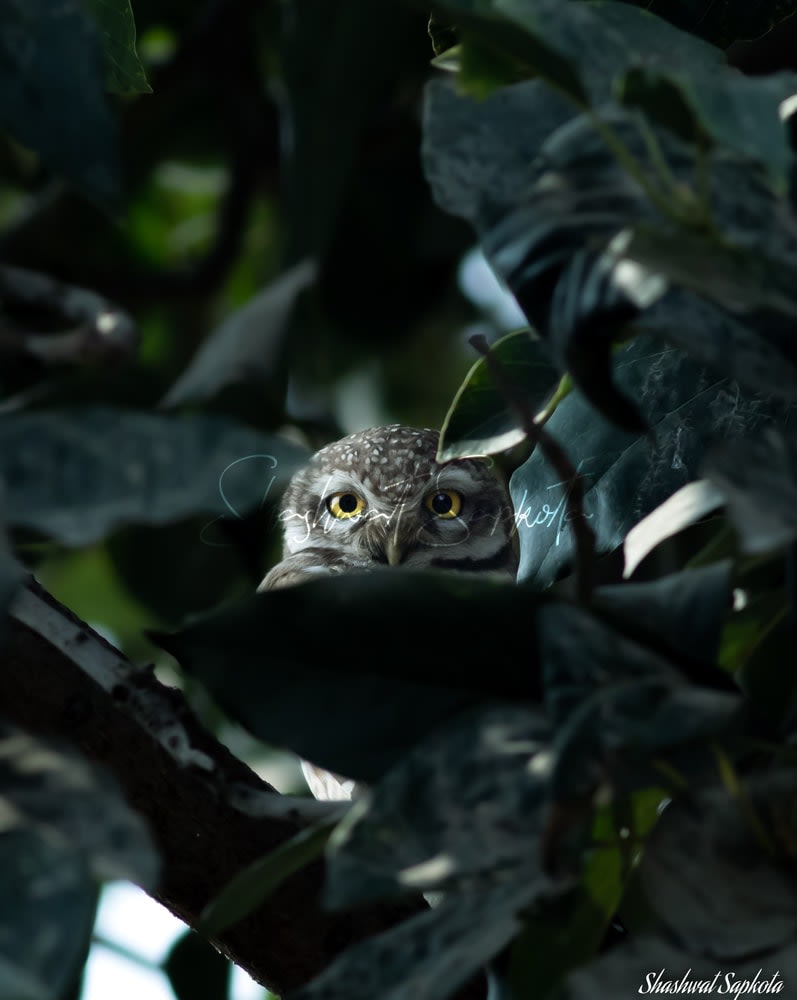
There is a particular fig tree on the eastern rim of the valley that I have come to think of as a friend. It leans over a footpath, heavy and dark, and if you sit beneath it long enough — still enough — the canopy begins to reveal its tenants.
The Spotted Owlet (Athene brama) is a creature of edges: temple walls, old mango groves, the seam between town and forest. They are not rare, exactly, but they are watchful, and a watchful bird is a hard bird to photograph well.
The wait
I arrived a little after seven. For the first forty minutes there was nothing but the sound of the path waking up — a scooter, a dog, someone’s radio. Then, without any announcement, two amber eyes resolved out of the leaves, no more than four metres above me.
The trick, I’ve learned, is to do almost nothing. No sudden lens. No stepping closer. Just breathe, and let the bird decide you are furniture.
Wildlife photography is mostly a discipline of stillness. The camera is the easy part.
The frame
When it finally turned its head into a shaft of morning light, I had perhaps three seconds. I kept the aperture wide to let the surrounding leaves fall into a soft, dark wash — I wanted the owlet to feel hidden, the way it actually was, rather than lifted out of its world.
That, to me, is the whole game: not just a sharp bird, but a sense of the place it belongs to.
If you’re just starting out with birds around Kathmandu, my advice is simple — pick one tree, and go back to it. The valley rewards familiarity far more than it rewards distance.