A Morning in Chitwan
Mist, elephant grass, and the unmistakable shape of a one-horned rhino — notes from a dawn drive through the Terai.
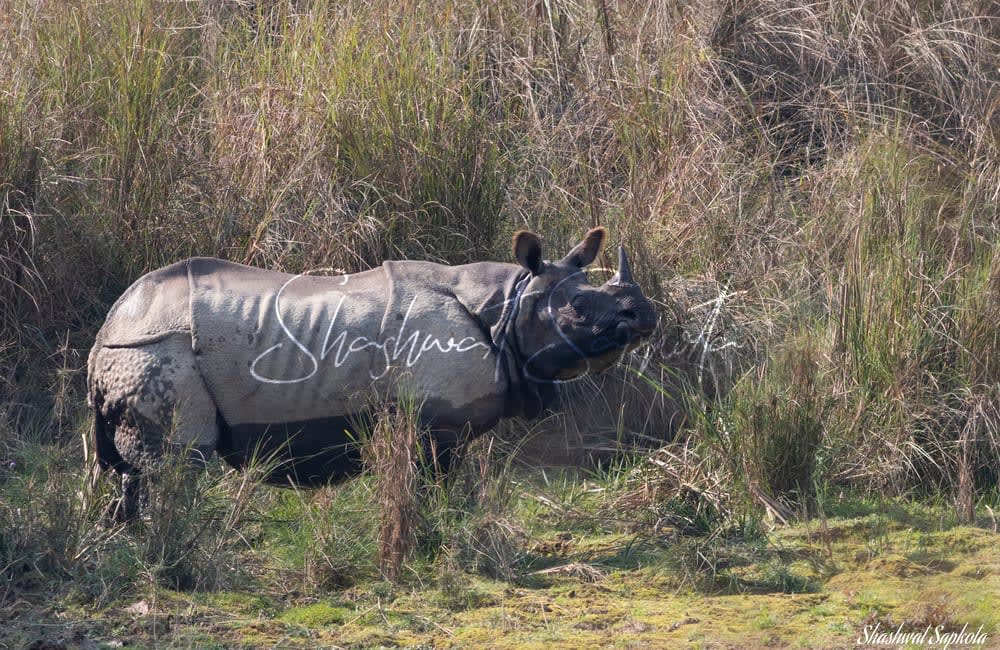
The Terai wakes differently than the hills. In the Kathmandu Valley the morning arrives in layers of cool blue; in Chitwan it arrives as heat, already, and as mist rising off the grass in slow columns.
Into the grass
We left before the light. The elephant grass here grows taller than a person, and driving into it feels like entering a green corridor with no ceiling — every gap a possibility, every rustle a question.
The Greater One-horned Rhinoceros (Rhinoceros unicornis) is the animal everyone comes to see, and for good reason. A century ago there were perhaps a few hundred left in all of Nepal. Today Chitwan alone holds hundreds — one of the quiet, stubborn success stories of conservation anywhere in Asia.
The sighting
We found him grazing, half-submerged in grass, entirely unbothered by us. I photographed low and wide, letting the grass frame him, trying to convey the sheer mass of the animal against the soft light.
A few things I keep reminding myself in the field:
- Light first, subject second. A rhino in flat noon light is just a grey rock.
- Leave room. The habitat is half the story.
- Know when to stop. The best sightings end because you chose to leave.
The search for the Royal Bengal Tiger, of course, continues. But a morning like this is its own reward — and the tiger, I tell myself, is just another reason to come back.